
Accounting Firm Website Design: A Practical Guide
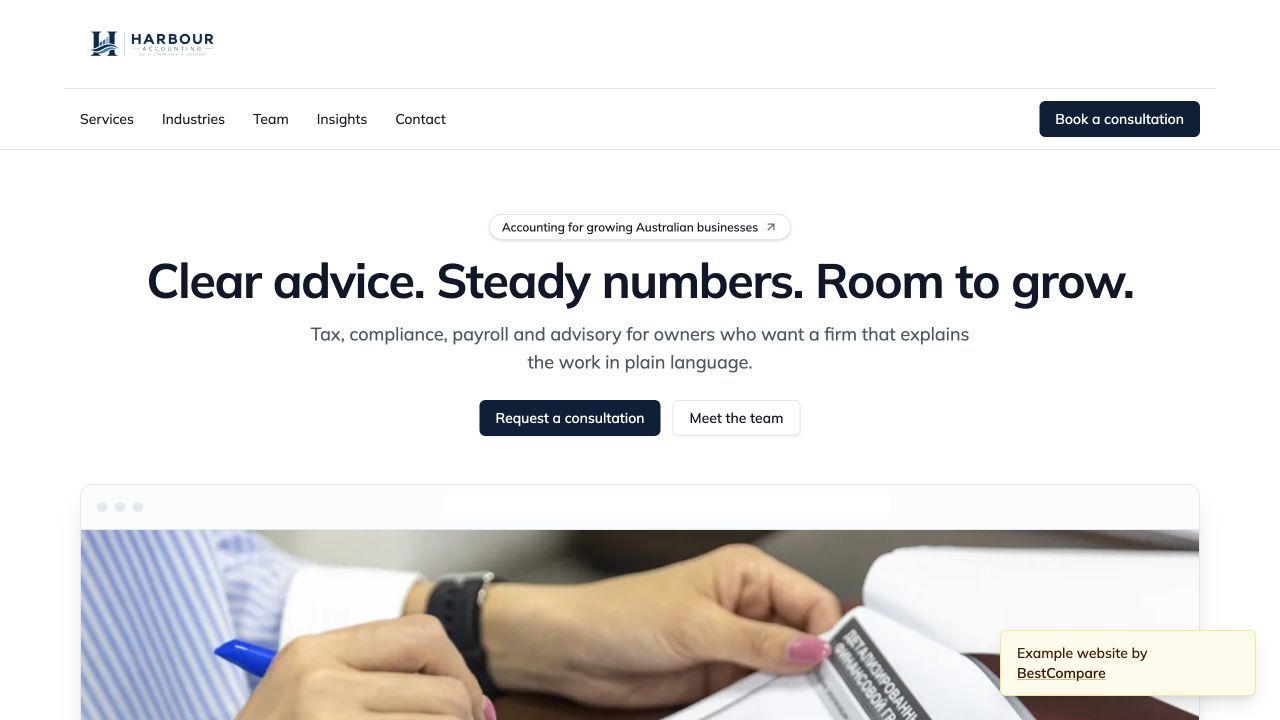
Accounting firm website design has a harder job than putting a list of services online. A prospective client is deciding whether your firm understands their situation, explains things clearly, and is worth contacting with sensitive business information.
The best accounting websites make that decision easier. They show who the firm helps, explain the services in plain language, introduce the people behind the advice, and make the first conversation straightforward. They also give search engines enough clear, crawlable information to understand the firm.
This guide is for Australian accounting firms, bookkeepers, tax practices, and advisory teams planning a new website or reviewing an existing one.
Start with the clients and conversations you want
Before choosing a visual style, decide which clients and enquiries the website should support. A sole trader looking for annual tax help needs a different first step from an established company looking for business advisory or management reporting.
Write down:
- The client types the firm genuinely works with
- The services that are most important to the practice
- The industries or situations where the team has real experience
- The locations and meeting options the firm actually supports
- The action a suitable visitor should take next
This prevents the common “we do everything for everyone” homepage. Broad positioning can sound safe, but it gives a prospective client little reason to recognise your firm as relevant.
The accounting website design page shows how service, client type, team, and consultation content can be brought together without making unsupported professional claims.
Build a clear accounting website structure
A small firm does not need dozens of pages at launch. It does need the right pages to answer different questions properly.
Home page
The home page should explain the firm’s audience, main services, location or coverage, and next step quickly. It can introduce the full offer, but it should not force every visitor to read a long list of unrelated services before finding a phone number or consultation link.
Service pages
Give important services their own page when they involve different questions, clients, proof, or enquiry paths. Depending on the firm, that could include:
- Tax and compliance
- Bookkeeping and reporting
- Payroll and business administration
- Business advisory and planning
- Self-managed superannuation support where the firm provides it
- Industry-specific accounting support
Each service page should explain what the firm does, who it is for, what the engagement generally involves, and how to ask a sensible first question. Avoid presenting general information as personal tax or financial advice, and have a qualified person review technical copy before it is published.
Team and adviser profiles
Accounting is a relationship-led service. A visitor may want to know who they will speak with, what each person works on, and how the team communicates.
Useful profiles can include:
- The person’s role and areas of work
- Relevant qualifications, registrations, or memberships
- The types of clients or conversations they support
- A current, professional photo where appropriate
- A clear path to contact the firm rather than an unmonitored personal inbox
Keep profiles accurate when staff join, change roles, or leave. An outdated team page can undermine confidence quickly.
Industry or client-type pages
Industry pages can help a firm explain relevant experience for builders, medical practices, trades, professional services, property investors, or other client groups. Only create them where the firm can provide genuinely useful, specific information.
Do not publish a page for every industry or suburb by changing a few words. Thin, repetitive pages are not useful to clients and can create a poor search experience. A strong page might discuss common workflows, questions to prepare, the services that often connect, and the firm’s actual experience.
Resources and FAQs
Resources can answer recurring questions before a prospect books a call. Good topics come from real conversations, such as what to prepare for a first meeting, how the onboarding process works, or which records a business should keep ready for a review.
Technical accounting, tax, and regulatory content should include an appropriate date and be reviewed when rules change. It should make its scope clear and direct readers to professional advice where their circumstances matter.
Contact and consultation page
The contact page should make the first step feel manageable. Explain whether the visitor should call, request a consultation, send an enquiry, or book through another system.
Ask only for information that helps the firm respond. A short form might request a name, email or phone number, business type, the service they are considering, and a brief description of the question. Do not ask visitors to upload sensitive financial records through an unprotected form just to make the form look thorough.
Explain what happens next, who receives the enquiry, and whether the initial conversation is an assessment rather than advice. Clear expectations improve the quality of the enquiry and reduce avoidable back-and-forth.
Make trust visible without making promises
Accounting firms need credibility, but generic claims are not the same as proof. Replace phrases such as “the leading experts” with accurate evidence a visitor can check or understand.
Depending on what applies to the firm, trust content may include:
- The real team and their relevant credentials
- Professional memberships or registrations, described accurately
- Years in practice where the wording is verifiable
- Genuine testimonials or approved client examples
- The firm’s communication process and response expectations
- A clear privacy policy and explanation of how enquiries are handled
- Office, meeting, and service-area information
Never invent reviews, awards, client results, certifications, or industry experience. If a result is published, explain what the firm actually did and avoid implying that another client will achieve the same outcome.
The website should support a professional conversation, not promise a tax result, investment outcome, guaranteed saving, or particular business growth.
Design the mobile journey around the first enquiry
Many people will visit an accounting website from a phone after searching for a service or asking for a recommendation. The mobile page should answer the basic questions before asking the visitor to complete a long form.
Check that:
- The firm’s name and main service are visible immediately
- The phone link works with one tap
- The consultation action is consistent across important pages
- Text is readable without zooming or horizontal scrolling
- Form labels, errors, and success messages are clear
- The page remains usable with keyboard navigation and a screen reader
- Office details, hours, parking, and meeting options are easy to find
Design should make the firm feel calm and clear, but visual polish cannot compensate for hidden contact details or a slow page. Use real team and office imagery where it helps; do not let a large hero video delay the information a prospective client came to find.
Technical SEO for an accounting website
Technical SEO is the set of checks that helps search engines crawl, understand, and present the site. It also overlaps with accessibility, performance, and a good user experience.
Give each page a distinct search identity
Every important page should have:
- A unique title that describes the service or audience
- A useful meta description that sets an honest expectation
- One clear H1 that matches the page’s purpose
- A readable URL that is unlikely to change without a reason
- Internal links to related services and the next step
- A canonical URL pointing to the preferred version of the page
Do not put every service and suburb into a title. A title is more useful when it tells a person exactly what they will find after clicking.
Use normal crawlable links
Link services, team profiles, resources, and contact actions with standard HTML links. Make sure important pages can be reached through the navigation or relevant internal links rather than relying on a search box, hover interaction, or a script that may not be available to every visitor.
Keep structured data factual
Structured data can help describe the organisation, local business details, articles, breadcrumbs, and other page types when the information is visible and accurate. It does not guarantee rich results or rankings.
Use the firm’s real name, address or service area, phone number, opening hours, profiles, and approved content. Do not add fake reviews, hidden text, unsupported service areas, or claims that are not visible on the page.
Protect important URLs during a redesign
If an existing accounting website already receives search traffic or enquiries, record its important URLs before changing the structure. Map old pages to their closest useful replacements, update internal links, and test one-to-one redirects after launch.
Do not send every old page to the home page. A redirect is most helpful when it takes the visitor to the page that answers the same question. The website redesign SEO checklist covers the migration checks in more detail.
Check performance, accessibility, and indexing
Before launch, test the site on a phone and a slower connection. Confirm that:
- The sitemap contains the published pages
- Important pages are not accidentally marked
noindex robots.txtdoes not block pages that should be crawled- Images have descriptive alt text and sensible dimensions
- Core content is present in the HTML and not hidden behind a script
- Forms, phone links, booking links, and analytics work
- The generated pages have the expected title, description, canonical, and structured data
Google’s Core Web Vitals guidance covers loading, responsiveness, and visual stability. The Search Essentials are also a useful reference for the broader technical and content foundation.
A practical launch checklist
Before publishing a new accounting firm website, review it with someone who knows the practice and someone who is not close to it.
- Can a new visitor explain what the firm does after reading the home page?
- Are the priority services easy to find and clearly different from one another?
- Do team profiles, registrations, locations, and contact details reflect the current firm?
- Does each important page have a useful next step?
- Has a qualified person approved tax, accounting, financial, and regulatory wording?
- Are testimonials, case studies, images, and claims genuine and permissioned?
- Can a visitor enquire without sending sensitive documents through an unsuitable channel?
- Have titles, headings, links, redirects, sitemap, schema, forms, and mobile layouts been tested?
- Is there a person responsible for future updates when services, staff, hours, or rules change?
The last question matters more than it looks. An accurate website is an ongoing business asset, not a file that can be left untouched after launch.
How much content does a firm need to start?
Start with the pages that support real conversations: a focused home page, the main services, the team, the relevant client types, contact details, and a small set of useful FAQs. Add more resources when the firm has an approved question worth answering and a process for reviewing the content.
More pages are not automatically better. A smaller site with specific, current information is more helpful than a large site full of generic service descriptions and outdated staff profiles.
BestCompare builds accounting websites for Australian firms with service pages, team profiles, industry content, consultation paths, and ongoing updates. Plans start from $249/mo AUD with hosting and updates included; the final scope depends on the pages and support the firm needs. See website pricing or contact BestCompare with a short description of the practice.
Common questions
What should an accounting firm website include?
At minimum, it should explain the firm, priority services, relevant clients or industries, team, contact process, location or coverage, privacy information, and a clear next step. The exact structure depends on the practice.
Should accountants publish tax and financial articles?
They can be useful when the firm has a review process and publishes information that is accurate, dated, appropriately scoped, and approved by a qualified person. Articles should not be treated as a substitute for advice about a reader’s circumstances.
Do accounting firms need a page for every suburb?
No. Create a location page only when it provides genuinely useful information about the firm’s service, meeting options, coverage, or relevant local experience. Repeating the same copy with a new suburb name is not a sound local SEO strategy.
Can SEO guarantee more accounting enquiries?
No. Good technical foundations and useful content can make the firm easier to understand and find, but visibility and enquiries also depend on competition, demand, reputation, service quality, and the visitor’s decision.
How often should an accounting website be updated?
Update it whenever services, staff, contact details, hours, regulations, or important processes change. Review technical and tax content on a schedule that suits the subject and the firm’s approval process.