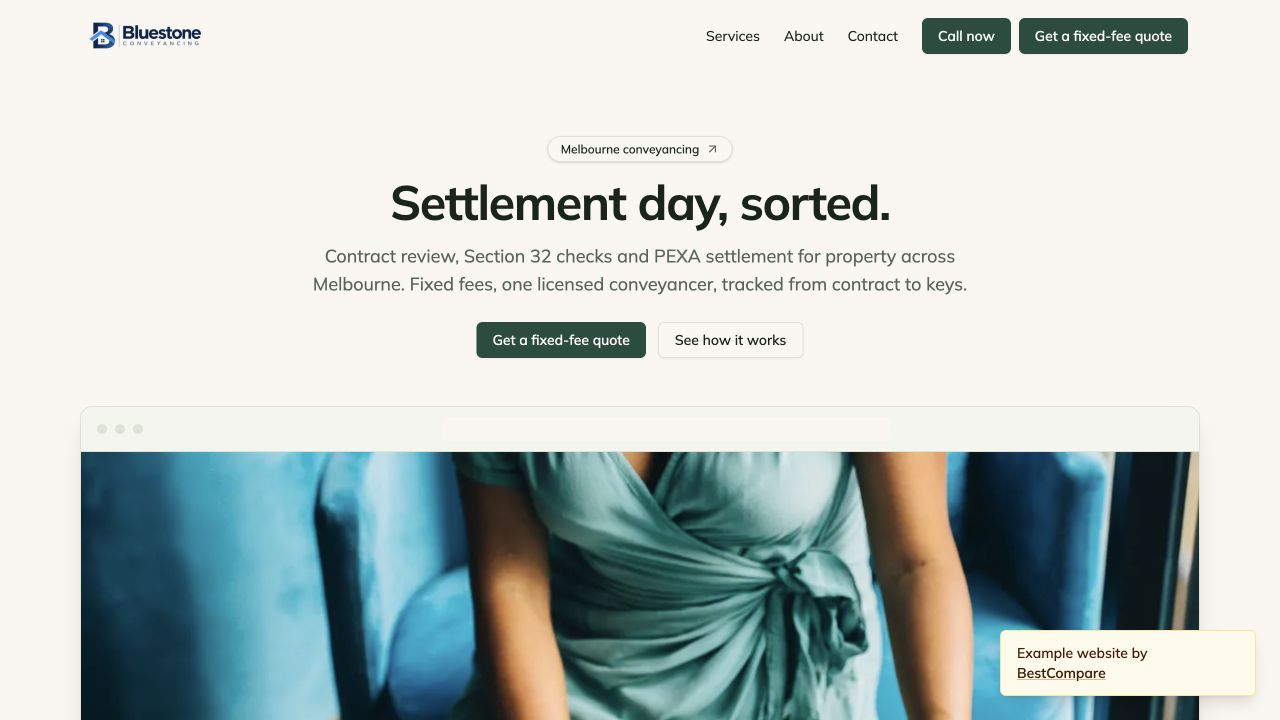
What should a conveyancer website include?
It can include buying and selling services, contract and title information, process explanations, state coverage, practitioner profiles, FAQs, fees, and consultation paths.
Can you create a page for contract review or Section 32 checks?
Yes. The page can explain what the practice reviews, what information a client may need to provide, and how to request the next conversation, subject to the practice’s approved wording.
Can the site support conveyancing quote enquiries?
Yes. A form can collect the transaction type, state, timing, and preferred contact path. Secure documents and automated quotes are scoped separately.
Can you guarantee more conveyancing clients from SEO?
No. Clear service pages and local foundations can improve understanding, but enquiries depend on location, competition, reputation, referrals, and transaction demand.
Can we update fees, practitioners, and process details later?
Yes. Approved fee notes, team details, service information, and process updates can be handled through the ongoing website plan.
What a conveyancer website must handle carefully
The site can explain services and process, but the practice remains responsible for jurisdiction-specific legal accuracy, advice, fees, privacy, and professional obligations. No invented licences, memberships, outcomes, fees, testimonials, or settlement guarantees. No promise that general website information is a substitute for advice on a specific transaction. Secure document portals, matter-management systems, and automated quoting need a separate scope.